How Generative AI Integration Automates WhatsApp Business
Using Generative AI Integration for WhatsApp Business marketing makes a noticeable difference, Instead of relying on fixed replies.

Key takeaways
- Generative AI automates WhatsApp Business by understanding the meaning and context of each message, so replies stay relevant when customers phrase things differently.
- Most businesses begin with customer support, lead qualification, order tracking and personalized engagement as the first areas to automate.
- Complex issues can still be passed to a human agent without disrupting the conversation while AI handles the repetitive queries.
- Start with one use case such as support or order tracking, train the system on relevant data, test it with real chats, then expand.
On this page
WhatsApp has become a key part of how businesses communicate with their customers. People don’t just message friends anymore; they ask their friends about products, check order updates, raise issues, and sometimes even complete purchases in the same chat.
That convenience is great, but it also creates pressure. When message volume increases, it gets harder to keep replies quick and consistent. Delays creep in. Conversations feel disconnected.
This is where Generative AI Integration for WhatsApp Business starts to make a noticeable difference. Instead of relying on fixed replies, businesses can respond in a way that feels more natural and relevant. The system understands intent, not just keywords.
You might notice the shift almost immediately; conversations feel smoother, and customers don’t have to repeat themselves.
How Generative AI Integration for WhatsApp Business Transforms Operations
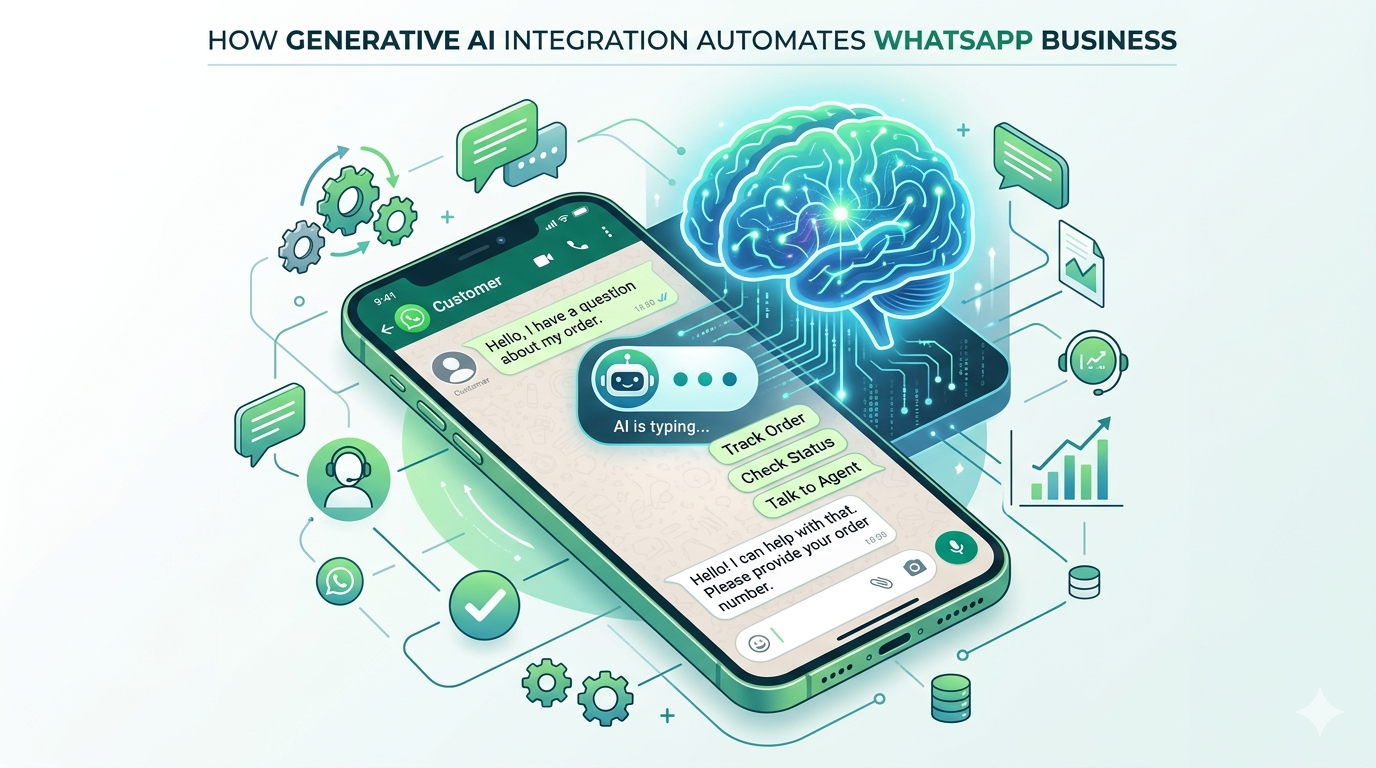
At a practical level, Generative AI Integration for WhatsApp Business changes how automated conversations are handled. Traditional bots depend on predefined rules. They work fine for predictable questions, but struggle when users phrase things differently.
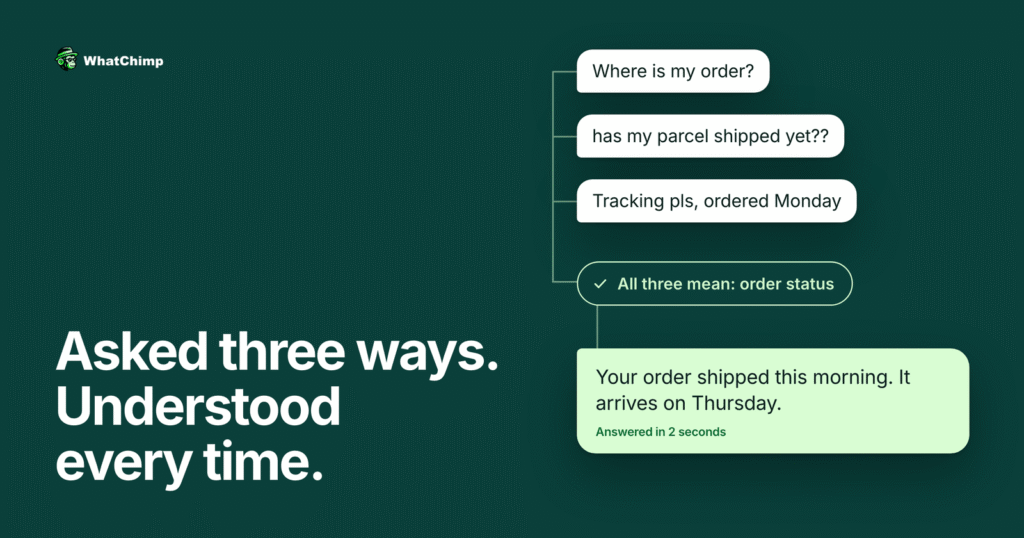
Generative AI handles this better because it focuses on meaning rather than exact wording. So even if two users ask the same question in completely different ways, the system can still respond correctly.
A simple example helps here. If a customer says they haven’t received their order, the system can:
🎯Recognize it as an order-related issue
🎯Ask for relevant details like the order ID
🎯Provide a real-time update or next steps
That’s the strength of AI-powered WhatsApp automation; it reduces friction in conversations.
Another important improvement is context awareness. Conversations on WhatsApp don’t happen in one message. A user might send:
- “Where’s my order?”
- Followed by: “It’s order #4582.”
A good AI system connects both messages and responds accordingly. It doesn’t treat them as separate queries.
Over time, this makes interactions feel less like talking to a bot and more like chatting with someone who understands the situation. Businesses are moving away from rule-based bots mainly because they become difficult to maintain. Every new scenario needs a new rule, and things get messy quickly.
If you’re getting started, understanding generative AI integration early helps you build something flexible instead of something that breaks as soon as things get slightly complex.
Key Use Cases of Generative AI in WhatsApp Automation
| Use Case | What It Does | Business Impact |
| Customer Support | Handles common queries instantly | Reduces response time and support load |
| Lead Qualification | Engages users and filters potential leads | Improves conversion efficiency |
| Order Tracking & Updates | Provides real-time order status and alerts | Enhances customer satisfaction |
| Personalized Engagement | Sends tailored messages and recommendations | Boosts retention and repeat purchases |
Once the basics are clear, the next step is figuring out where this actually fits in your business. In most cases, companies start with a few high-impact areas.
Customer Support
Customer support is usually the first place where AI is introduced. It handles repetitive queries quickly and reduces the workload on human agents, like appointment bookings, e.t.c.
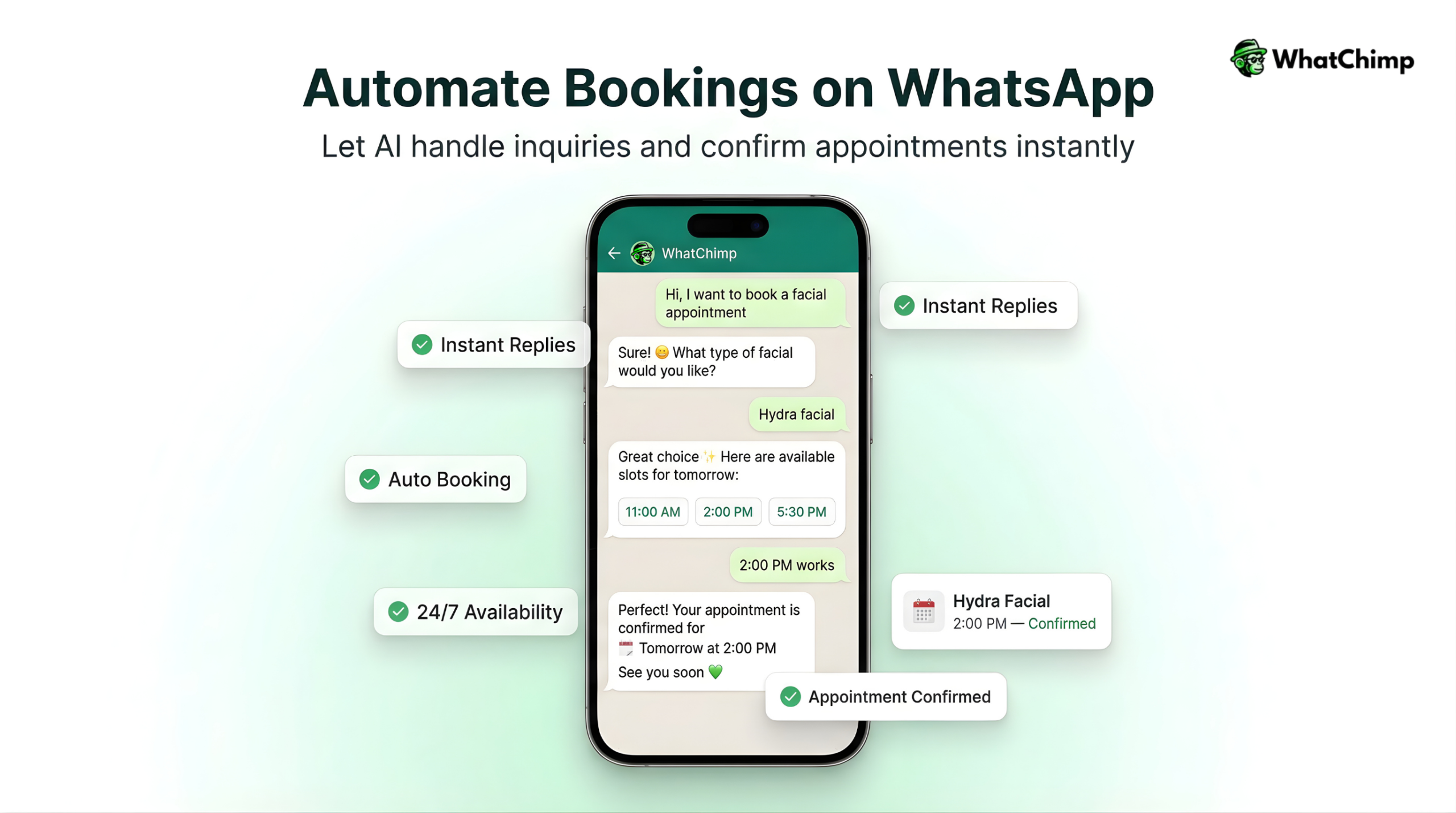
Common queries include:
📌Refund and cancellation requests
📌Product or service questions
📌Basic troubleshooting
At the same time, more complex issues can still be passed to a human without disrupting the conversation.
Lead Qualification
Sales teams often spend time filtering out unqualified leads. AI can handle the initial interaction and gather useful details.
For example, it can:
🔸Ask about requirements
🔸Understand the budget range
🔸Capture timelines
This means your team just focuses on leads that actually matter.
Order Tracking and Notifications
Order tracking and notification are one of the most practical use cases. Customers frequently ask about order status, and handling this manually can be time-consuming. AI can:
⚡Notify users about delays
⚡Provide real-time tracking updates
⚡Send shipping confirmations automatically
In many cases, customers don’t even need to ask; the system updates them proactively.
Personalized Engagement
This is where businesses start seeing deeper value.
Instead of sending generic messages, AI can:
✅Recommend products based on past behavior
✅Send reminders or follow-ups
✅Re-engage inactive users
This is one of the biggest WhatsApp AI integration benefits: you maintain personalization even as you scale.
If you’re planning to implement this across multiple workflows, working with experienced AI development services teams can make things much easier, especially when integrations get complex.
Benefits and Implementation of AI-Powered WhatsApp Automation
When businesses adopt Generative AI Integration for WhatsApp Business, the results usually show up in a few key areas.
✅Faster Responses
Customers expect quick replies, and with AI handling incoming messages instantly, wait times drop significantly. In many cases, responses are delivered within seconds, so customers don’t feel ignored or stuck waiting.
This kind of speed keeps conversations moving, reduces follow-up messages, and increases the chances that users will complete actions like placing an order or resolving an issue. Over time, it leads to a smoother, more responsive experience that customers start to rely on.
✅Reduced Operational Load
Instead of expanding support teams, businesses can manage higher volumes with fewer resources.
With AI workflow automation, teams can:
- Focus on complex cases
- Avoid repetitive tasks
- Improve overall productivity
✅Consistent Communication
AI ensures that responses follow the same tone and guidelines every time, which helps maintain a consistent brand voice across all interactions.
Whether a customer reaches out in the morning or late at night, the experience stays aligned with your standards and messaging. This consistency builds trust over time as customers know what to expect and don’t get mixed signals from different responses or agents.
✅Seamless System Integration
Most AI setups connect with existing business tools, such as:
- CRM systems
- Order management platforms
- Payment gateways
This allows users to complete multiple actions within a single conversation, which improves the overall experience.
✅Getting Started Without Overcomplicating Things
One of the common mistakes is trying to automate everything at once. That usually creates confusion instead of solving problems.
A better approach is to start small:
- Pick one use case (like support or order tracking)
- Train the system with relevant data
- Test it with real interactions
Once that works well, you can expand gradually. Some businesses also explore AI chatbot development to build custom workflows that fit their specific needs. This approach gives more control but requires proper planning.
✅Better Customer Insights
One underrated advantage is how much you can learn from conversations.
AI systems can track patterns across chats and help you understand:
- Common customer issues
- Frequently asked questions
- Drop-off points in conversations
Over time, this gives you a clearer picture of what customers actually need. You can use that data to improve products, refine messaging, or even adjust your support strategy.
✅Scalability Without Breaking the Experience
As your business grows, message volume increases. Handling that manually often leads to delays or inconsistent responses.
With AI in place, scaling becomes much easier. You can:
- Handle thousands of conversations at once
- Maintain response quality
- Avoid overloading your team
What’s important here is that growth doesn’t come at the cost of customer experience. Conversations still feel smooth, even at scale.
Final Words
Generative AI integration for WhatsApp Business is not just about automation. It’s about improving how conversations happen. Instead of scripted replies, businesses can offer interactions that feel more helpful and natural. Customers get faster responses, and teams spend less time handling repetitive queries.
You don’t need to build everything at once. Begin with one area, test it properly, and then expand. Over time, you’ll notice the difference. Conversations flow better. Customers feel heard. And your operations become easier to manage.
That’s where this approach really proves its value.