Let me save you some time: if you’re looking for bulk WhatsApp messaging software in 2026, you’re probably overwhelmed by options, confused by pricing structures, and worried about getting your number banned.
I get it, I’ve been there.
After 10+ years working with SaaS platforms, managing campaigns for everyone from solo entrepreneurs to enterprise sales teams, I’ve learned that choosing the right tool isn’t about finding the “best” one.
It’s about finding the right fit for your specific situation.
Some tools are fantastic for e-commerce but terrible for B2B outreach. Others have incredible automation but pricing that makes no sense for small teams.
In this article, I’m breaking down the bulk WhatsApp messaging software I actually recommend to clients, friends, and colleagues. In my experience, deliver reliable results without unnecessary headaches.
Fair warning: I’ll be blunt about the downsides too, because every tool has them.
What is WhatsApp Broadcasting Software?
Let me break this down in a way that’s actually useful, because understanding the difference between “real” WhatsApp broadcasting software and the risky shortcuts will save you a lot of headaches.
WhatsApp broadcasting software is a platform that lets you send messages to hundreds or thousands of WhatsApp contacts at once.
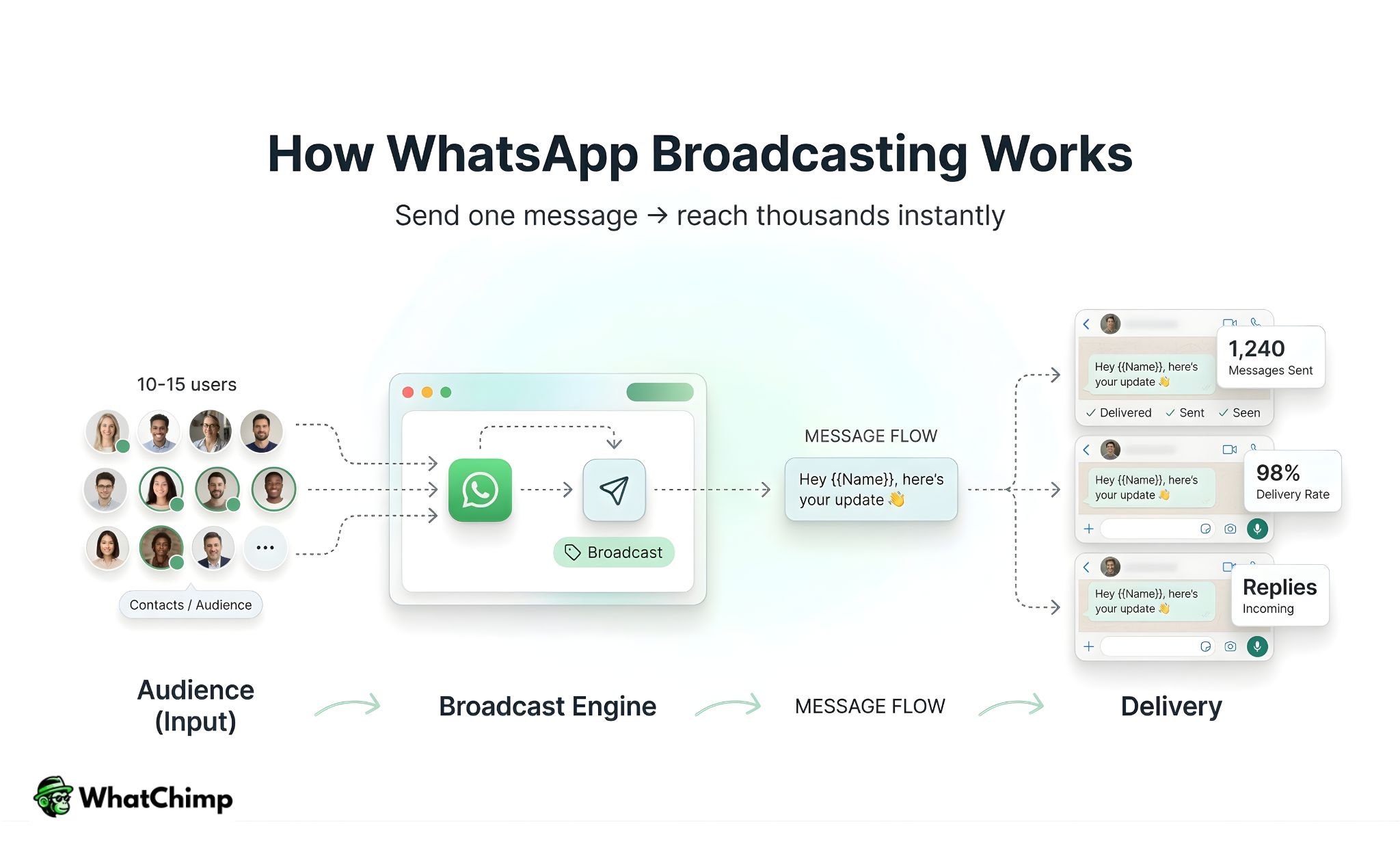
But the best tools use Meta’s official WhatsApp Business API, which is completely different from the free WhatsApp Business app on your phone.
WhatsApp Business App vs. API-Based Broadcasting
The free WhatsApp Business app has a basic broadcast feature, and I still use it occasionally for small lists. It’s fine for maybe 50-100 people, but there are hard limits: only 256 contacts per list, recipients must have your number saved, and there’s zero integration with your CRM or other tools.
API-based broadcasting software is built on the WhatsApp Business API, Meta’s official infrastructure for businesses.
This is where the real power comes in:
📌Message unlimited contacts (within your account’s quality rating limits)
📌Send to people who don’t have your number saved
📌Integrate with your CRM, e-commerce platform, or custom systems through webhook connections
📌Access detailed analytics (delivery rates, read receipts, response tracking)
📌Use multi-agent team inboxes for customer support
📌Automate workflows based on customer behavior
📌Send rich media (images, documents, videos, interactive buttons)
The technical foundation matters because it determines reliability, compliance, and whether you’ll get banned or not.
Official vs. Unauthorized Tools (This One Cost Me)
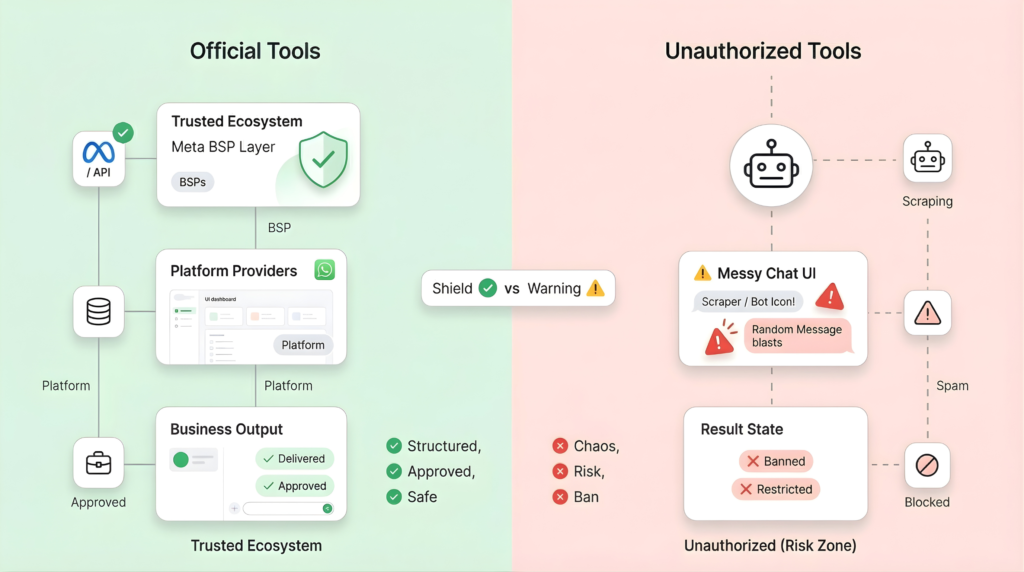
Here’s where I learned an expensive lesson back in 2016. There are essentially three types of WhatsApp broadcasting tools:
1. Meta Business Solution Providers (BSPs)
These are companies that are Meta’s verified partners who provide direct API access. They’ve passed Meta’s compliance audits and their infrastructure routes through official WhatsApp servers.
2. Platform Providers (Built on BSPs)
These are user-friendly tools like WhatChimp, Wati, or Interakt that sit on top of official BSPs. They add drag-and-drop interfaces, chatbot builders, automation, and integrations so you don’t need developers. This is where most businesses should operate, you get official API access with an easy-to-use layer on top.
3. Unauthorized Scraping Tools
These are the dangerous ones. They use web scraping or browser automation to send messages through WhatsApp Web, basically hacking the consumer app.
I tried one of these early on because it was cheap and required no approval process.
Big mistake.
Within three days, we had multiple numbers permanently banned. WhatsApp’s detection systems analyze message patterns, sending velocity, and device behavior. Once you’re flagged, there’s no appeal process.
My rule now: Only use platforms with verified Meta Business Partner status or those built on official BSP infrastructure. Yes, there’s an application process and business verification required, but you’re protecting your communication channel.
Why WhatsApp Outperforms Email (From What I’ve Seen)
I’ve been doing email marketing for over a decade, and I still love it for certain use cases. But the engagement gap between email and WhatsApp is honestly staggering. In campaigns I’ve run over the past two years:
- WhatsApp open rates: 90-98% (usually within minutes)
- Email open rates: 18-25% (if we’re lucky)
- WhatsApp response rates: 45-65%
- Email response rates: 2-5%
The reason is WhatsApp is a push notification platform with guaranteed delivery. Messages don’t get caught in spam filters or buried in promotional tabs. People check WhatsApp constantly, it’s personal and immediate.
For transactional messages like order confirmations, delivery updates, or OTPs, WhatsApp consistently delivers at 95%+ rates. For customer support where response time matters, I’ve seen resolution times drop from 24-48 hours (email) to under 30 minutes (WhatsApp).
That said, WhatsApp isn’t perfect for everything.
It’s not great for long-form content or newsletters. You need explicit opt-ins (GDPR and compliance matter here). And you’re operating within Meta’s policies, which can be strict.
But for high-intent, conversational engagement where timing matters? Nothing else I’ve used comes close.
WhatsApp broadcasting software, when done right through official API access, lets you have personal, one-to-one conversations at scale.
The tools I recommend below all use official API infrastructure, offer transparent pricing based on Meta’s conversation model, and give you the technical capabilities you need without requiring a development team.
Next, I’ll walk you through exactly what features to look for when evaluating these platforms because even among “official” tools, there are big differences in quality and functionality.
Comparison Table: Top WhatsApp Messaging Software
| Tool Name | Key Features | Starting Price | Best For |
| WhatChimp | ✅ 0% markup on Meta fees (direct billing) ✅ 99% delivery rate, 10-sec template approvals ✅ AI chatbot + multi-agent inbox ✅ Drip campaigns, behavioral triggers ✅ Integrations: Shopify, WooCommerce, Zapier, Google Sheets | $24/mo (Free trial for 7 days) | Small to mid-sized businesses wanting transparent pricing and official API access without markup fees |
| Wati | ✅ Shared team inbox with smart routing ✅ No-code chatbot builder ✅ Broadcast campaigns with segmentation | $24/month | Customer support teams and SMBs focused on team collaboration and inbound conversations |
| Gallabox | ✅ Multi-channel inbox (WhatsApp, Instagram, FB, web chat) ✅ Conversation workflows with automation ✅ Team collaboration tools | $38.55/month | Growing businesses wanting affordable multi-channel support with WhatsApp as centerpiece |
| Respond.io | ✅ Omnichannel unified inbox (WhatsApp + 10+ channels) ✅ AI-powered routing & workflow automation ✅ Deep CRM integrations (HubSpot, Salesforce) | $79/month(Starter plan)Marketing features from $159/month+ Meta conversation charges (no markup) | Enterprise teams managing conversations across multiple channels needing advanced routing and CRM sync |
| Msg91 | ✅ Bulk broadcasting with high throughput ✅ OTP services optimized for fast delivery ✅ Transactional alerts and notifications | $40/mo | |
| MessageBird | ✅ WhatsApp API with Flow Builder (visual interface) ✅ Programmable conversations with API access ✅ International reach (190+ countries) | Custom pricing | Mid-sized to enterprise businesses with light technical resources wanting global reach and customization |
| Gupshup | ✅ Proven enterprise scalability (billions of messages) ✅ Smart messaging campaigns & bot-building | Custom pricing | Large enterprises and regulated industries needing proven reliability, compliance, and massive scale |
| WACTO | ✅ Contact management with CRM features ✅ Bulk messaging with personalization ✅ Automated replies & message scheduling | $24.65/mo | Small businesses and startups just getting started with WhatsApp marketing on a tight budget |
1. WhatChimp
What It Is:
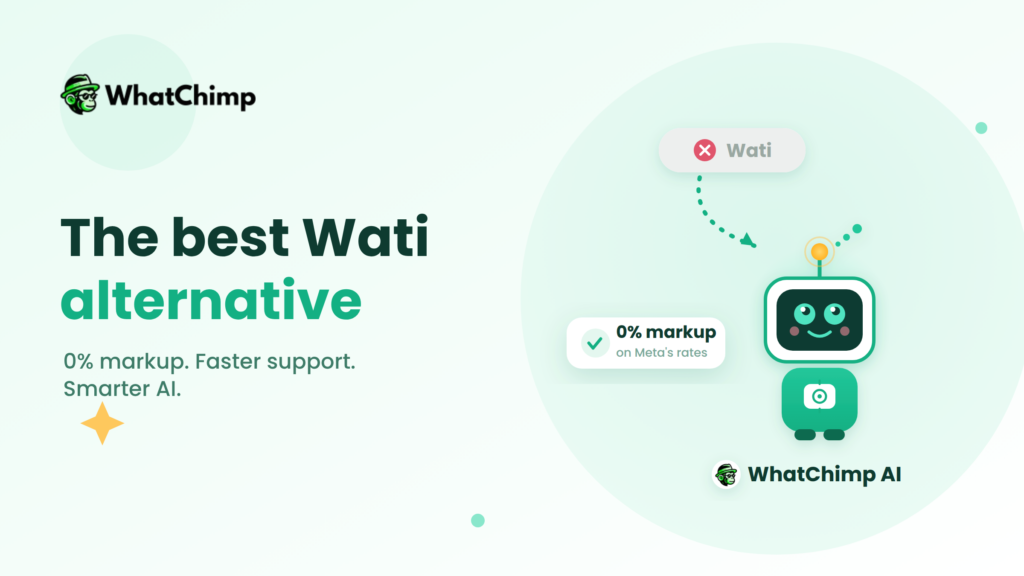
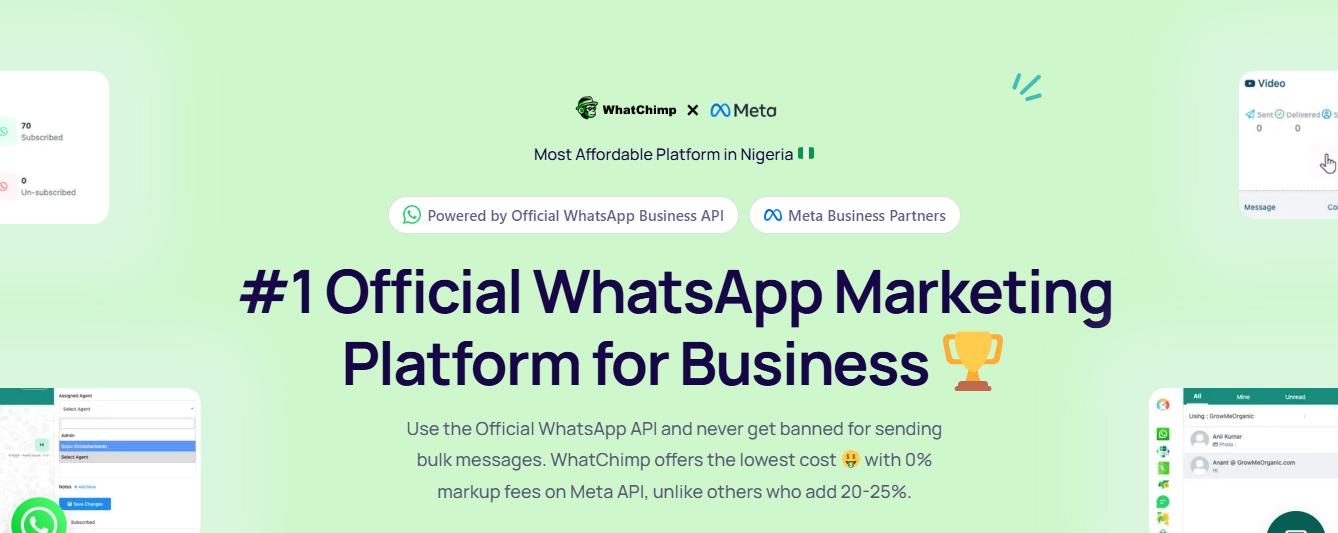
Official WhatsApp Business API platform and verified Meta Business Partner. WhatChimp positions itself as the most affordable option with 0% markup on Meta’s conversation charges, making it particularly attractive for businesses scaling their message volume.
Key Features:
✅Zero markup pricing – Pay only Meta’s conversation rates (save up to 35% vs. competitors)
✅99% delivery rate with triple-verified contact validation
✅10-second template approvals (faster than most platforms I’ve tested)
✅AI chatbot builder with natural language processing
✅Multi-agent live chat with smart routing and assignment
✅Drip campaign automation with behavioral triggers
✅Rich integrations – Shopify, WooCommerce, Google Sheets, Zapier, HubSpot
✅Broadcast segmentation with custom attributes and tags
✅Shared team inbox for collaborative customer support
✅Analytics dashboard tracking delivery, reads, responses, and conversions
Limitations:
❌Relatively newer in the market compared to enterprise players like Twilio or Gupshup
❌Some advanced features may require technical knowledge for webhook setup
❌Customer support is strong but doesn’t offer 24/7 phone support yet
❌Documentation could be more extensive for complex API use cases
2. Wati (WhatsApp Team Inbox)
What It Is:
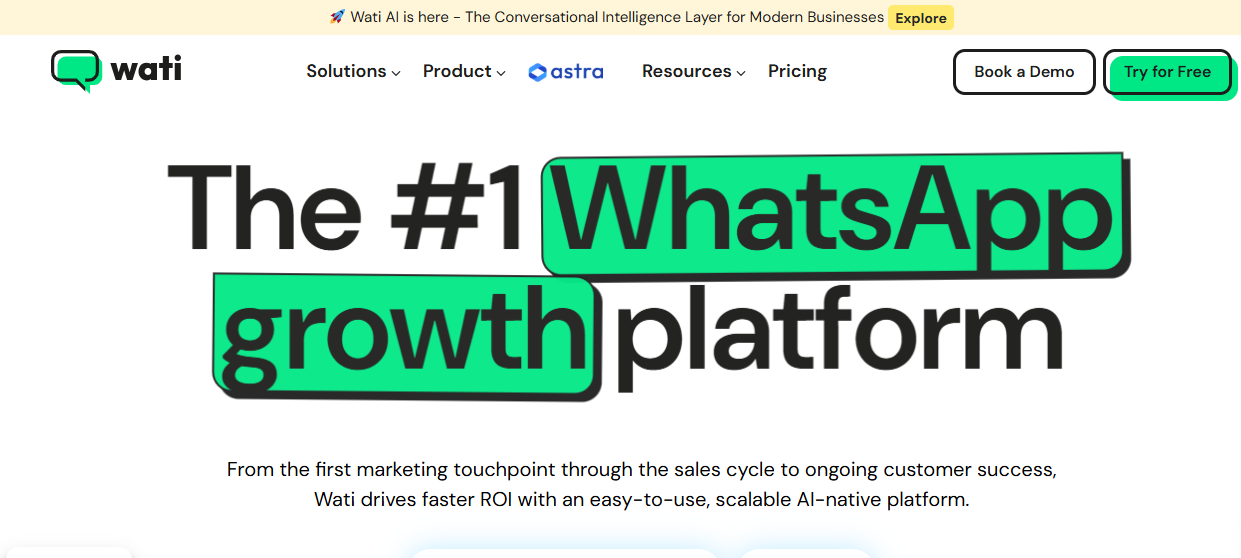
Cloud-based WhatsApp Business API platform built specifically for SMBs. Wati focuses heavily on customer support and team collaboration with an intuitive interface that doesn’t require technical expertise.
Key Features:
✅Shared team inbox with conversation assignment and internal notes
✅No-code chatbot builder with visual flow designer
✅Broadcast campaigns with contact segmentation
✅Smart routing based on keywords, departments, or round-robin
✅Canned responses library for quick replies
✅Mobile app for managing conversations on the go
✅Basic CRM with contact management and tags
✅Analytics for team performance and message metrics
✅Integrations with Google Sheets, Zapier, and common tools
✅Multiple user roles and permissions
Limitations:
❌Pricing can get expensive as you scale (per-user pricing model)
❌Limited advanced automation compared to enterprise platforms
❌Chatbot capabilities are basic – not great for complex conversational AI
❌Some users report occasional delays in message syncing
❌Integration ecosystem is smaller than competitors
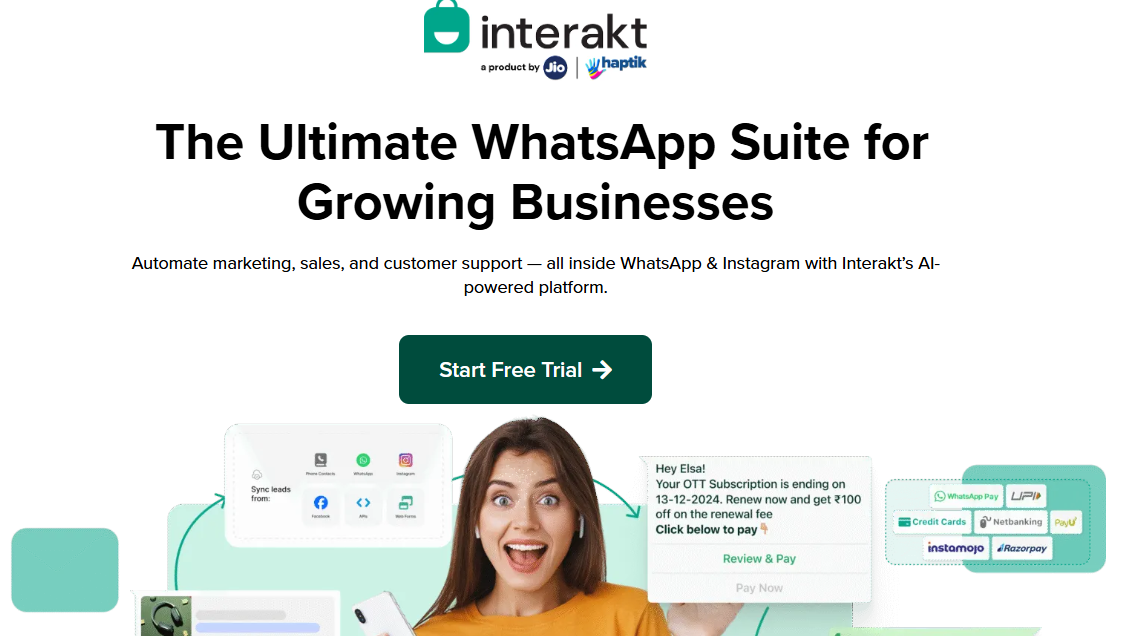
3. Interakt
What It Is:
WhatsApp Business API solution built for conversational commerce, particularly strong in the Indian market. Interakt specializes in turning WhatsApp into a complete sales channel with catalog, payments, and order management.
Key Features:
✅Product catalog integration – Browse and buy within WhatsApp
✅Payment collection (UPI, cards, wallets for Indian markets)
✅Order management system with tracking and notifications
✅Detailed customer segmentation with purchase history
✅Abandoned cart recovery automation
✅Click-to-WhatsApp ads integration with Facebook/Instagram
✅Broadcast campaigns with personalization
✅Team inbox for sales and support
✅Analytics dashboard with ROI tracking
✅Shopify, WooCommerce integration for e-commerce
Limitations:
❌Payment features are primarily India-focused (limited in other regions)
❌Pricing isn’t transparent on their website – need to contact sales
❌Interface can feel cluttered with e-commerce features if you don’t need them
❌Some users report a learning curve for advanced features
❌Customer support response times vary
4. AiSensy
What It Is:
Enterprise-grade WhatsApp marketing automation platform popular among D2C brands. AiSensy focuses on advanced personalization, behavioral segmentation, and sophisticated drip campaigns.
Key Features:
✅Advanced personalization with unlimited custom attributes
✅Behavioral triggers based on user actions (clicks, purchases, page visits)
✅Drip sequences with complex conditional logic
✅Abandoned cart recovery with dynamic product recommendations
✅Customer journey mapping with visual workflow builder
✅AI-powered chatbots with lead qualification
✅Team inbox with assignment and collaboration
✅Deep analytics including attribution and revenue tracking
✅Integrations with Shopify, WooCommerce, custom APIs
✅Multi-language support for global campaigns
Limitations:
❌Pricing is on the higher end – positioned for established brands
❌Steep learning curve for non-technical users
❌Some features require developer involvement for webhook setup
❌Reporting interface can be overwhelming with too many metrics
❌Contract terms may require annual commitments
5. Gallabox
What It Is:
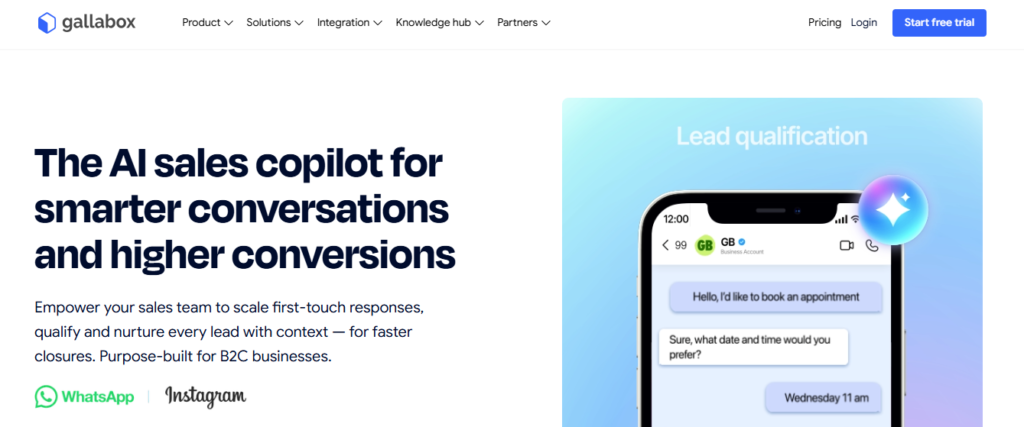
Multi-channel customer engagement platform with WhatsApp as the centerpiece. Gallabox positions itself as an affordable all-in-one solution for growing businesses that want team collaboration and workflow automation.
Key Features:
✅Unified inbox for WhatsApp, Instagram, Facebook Messenger, and chat
✅Conversation workflows with automation rules
✅Broadcast campaigns with segmentation
✅Contact management with CRM-like capabilities
✅Team collaboration with internal chat and notes
✅No-code chatbot builder
✅Template management with approval tracking
✅Basic analytics and reporting
✅Integrations with Google Sheets, Zapier, webhooks
✅Affordable pricing with transparent tiers
Limitations:
❌Feature depth is good but not industry-leading in any category
❌Multi-channel support means some WhatsApp-specific features lag behind specialists
❌Documentation could be more comprehensive
❌Integration ecosystem is growing but limited compared to established players
❌Some advanced automation requires custom development
6. Respond.io
What It Is:
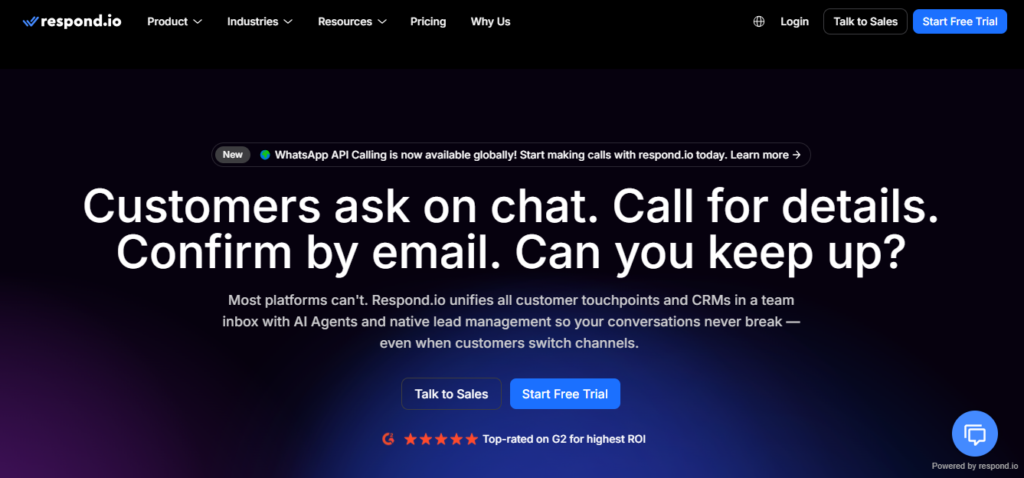
Omnichannel conversation management platform that brings WhatsApp, email, SMS, social media, and live chat into one powerful interface. Strong on enterprise features with AI-powered automation and deep CRM integrations.
Key Features:
✅Omnichannel unified inbox (WhatsApp, email, FB, Instagram, SMS, WeChat, more)
✅AI-powered routing with intelligent conversation assignment
✅Workflow automation with visual builder and complex logic
✅Deep CRM integrations – HubSpot, Salesforce, Pipedrive with bi-directional sync
✅Broadcast capabilities across channels
✅Contact merging across different channels (same person on WhatsApp and email)
✅Team performance analytics and SLA monitoring
✅Custom fields and segmentation
✅Role-based access control for enterprise teams
✅API access for custom integrations
Limitations:
❌Pricing scales quickly with team size and message volume
❌Can be overwhelming if you only need WhatsApp (lots of features you won’t use)
❌Initial setup and configuration requires time investment
❌Some users report the interface feels complex for simple tasks
❌Customer support quality varies by pricing tier
7. Twilio Conversations (WhatsApp)
What It Is:
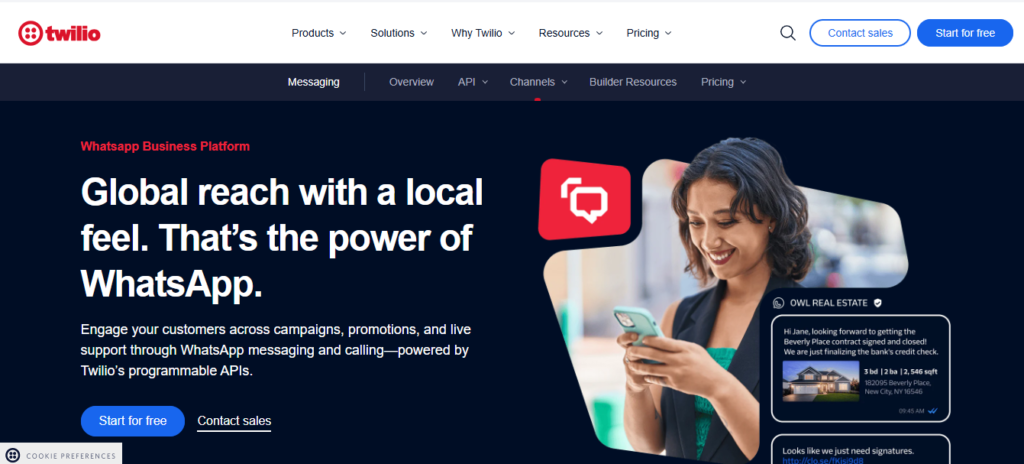
Developer-friendly API platform for building custom WhatsApp solutions. Twilio is a communications infrastructure provider, not a ready-to-use interface, so you’ll need technical resources to build your exact requirements.
Key Features:
✅Full API control over WhatsApp Business API
✅Programmable messaging with complete customization
✅Scalable infrastructure handling millions of messages
✅Multi-channel support (SMS, voice, email, video alongside WhatsApp)
✅Extensive documentation and developer resources
✅SDKs for multiple languages (Python, Node.js, PHP, Java, more)
✅Webhook system for real-time event handling
✅Global reach with local phone number provisioning
✅Security and compliance (SOC 2, HIPAA, GDPR compliant infrastructure)
✅Enterprise SLAs with guaranteed uptime
Limitations:
❌Requires developers – not a plug-and-play solution
❌No built-in UI for team inbox, broadcasting, or chatbots (you build everything)
❌Pricing can get complex with multiple service fees
❌Steeper learning curve even for technical teams
❌Support is developer-focused, not business-user friendly
❌You’re responsible for building and maintaining your interface
8. MessageBird
What It Is:
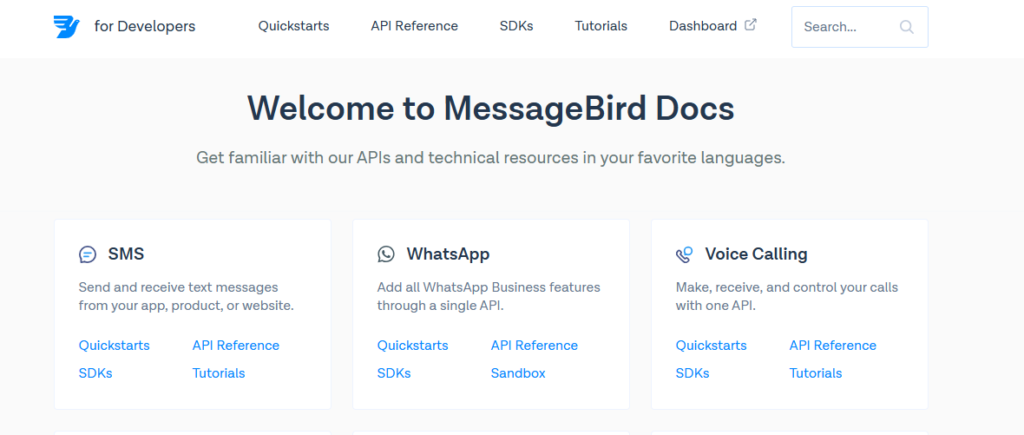
Cloud communications platform offering WhatsApp Business API with programmable flows. Similar positioning to Twilio but with a more user-friendly layer, sits between pure API (Twilio) and complete platforms (Wati).
Key Features:
✅WhatsApp Business API with Flow Builder (visual interface)
✅Programmable conversations with API access for developers
✅Multi-language support for global campaigns
✅International reach with local number provisioning in 190+ countries
✅Omnichannel platform (WhatsApp, SMS, voice, email)
✅Inbox interface (more built-in UI than pure API providers)
✅Template management system
✅Integrations with popular tools via API
✅Robust documentation for developers
✅Compliance tools for GDPR and regional regulations
Limitations:
❌Still requires some technical knowledge for advanced features
❌Pricing structure can be confusing with multiple components
❌User interface is less polished than dedicated WhatsApp platforms
❌Limited out-of-the-box features compared to full-service platforms
❌Customer support can be slow for non-enterprise accounts
❌Some regional limitations on WhatsApp API availability
9. Gupshup
What It Is:
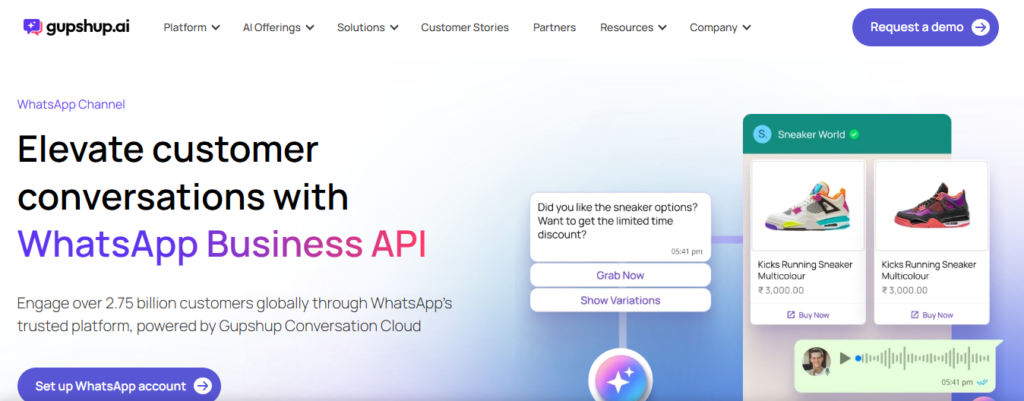
Enterprise conversational engagement platform trusted by large organizations for scalability and compliance. Gupshup is one of the original Meta BSPs with proven infrastructure handling billions of messages.
Key Features:
✅Proven scalability – Handles enterprise message volumes reliably
✅Smart messaging campaigns with advanced segmentation
✅Bot-building platform with NLP and AI capabilities
✅Multiple channel support (WhatsApp, SMS, RCS, voice)
✅Industry templates for common use cases (banking, retail, healthcare)
✅Enterprise security and compliance certifications
✅Dedicated account management for enterprise clients
✅Global infrastructure with high availability
✅API access for custom integrations
✅Analytics and reporting with custom dashboards
Limitations:
❌Pricing is enterprise-level – not suitable for small businesses
❌Sales process requires demos and negotiations (no transparent pricing)
❌Interface feels dated compared to modern SaaS platforms
❌Can be overkill for simple broadcast needs
❌Contract terms typically require annual commitments
❌Some features require professional services to implement
10. WACTO
What It Is:
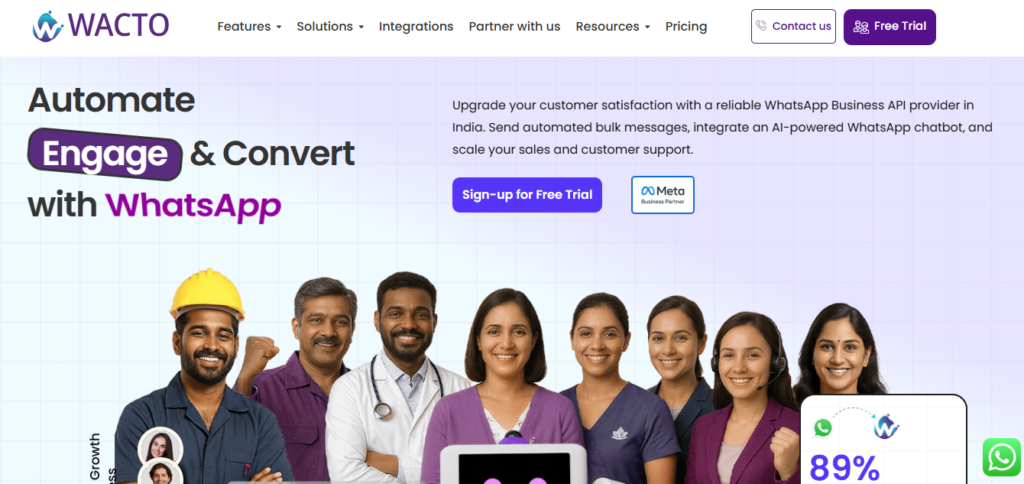
WhatsApp CRM and marketing automation tool designed specifically for small businesses. WACTO focuses on ease of use with an affordable price point and straightforward features.
Key Features:
✅Contact management with CRM-like organization
✅Bulk messaging with personalization fields
✅Automated replies for common questions
✅Message scheduling with timezone optimization
✅Broadcast lists with segmentation
✅Template library for quick campaigns
✅Basic chatbot functionality
✅Team collaboration features
✅Mobile app for managing on the go
✅Simple pricing suitable for small teams
Limitations:
❌Limited advanced automation capabilities
❌Integration ecosystem is basic
❌Analytics are surface-level (lacks deep insights)
❌May not scale well for growing businesses
❌Customer support is email-based (no phone support)
❌Some users report occasional message delivery delays
❌Documentation could be more comprehensive
11. Zoko
What It Is:
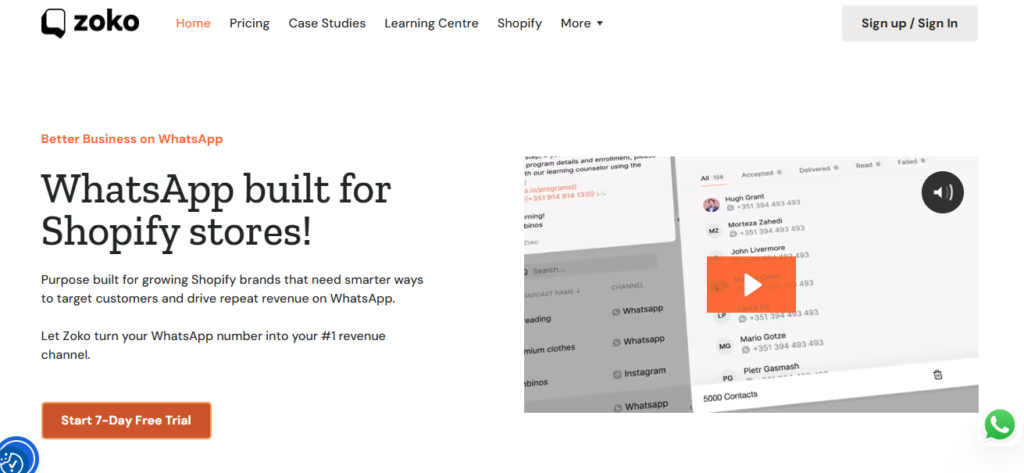
WhatsApp-first customer engagement platform built specifically for e-commerce businesses. Zoko specializes in Shopify integration and commerce-specific features like COD to prepaid conversion and order tracking.
Key Features:
✅Deep Shopify integration – Syncs products, orders, customers automatically
✅COD to prepaid conversion campaigns (important for Indian market)
✅Order tracking notifications with automated status updates
✅Abandoned cart recovery with personalized product images
✅Catalog sharing within WhatsApp conversations
✅Click-to-WhatsApp ads integration
✅Team inbox for customer support
✅Broadcast campaigns with purchase history segmentation
✅Customer feedback collection automation
✅Analytics focused on e-commerce metrics (cart recovery rate, conversion)
Limitations:
❌Heavily focused on e-commerce – not ideal for non-retail businesses
❌Shopify integration is strongest; other platforms have less functionality
❌Pricing can increase significantly with message volume
❌Some advanced features require higher-tier plans
❌Limited customization for non-commerce workflows
❌Primarily optimized for Indian and Asian markets
12. Charles
What It Is:
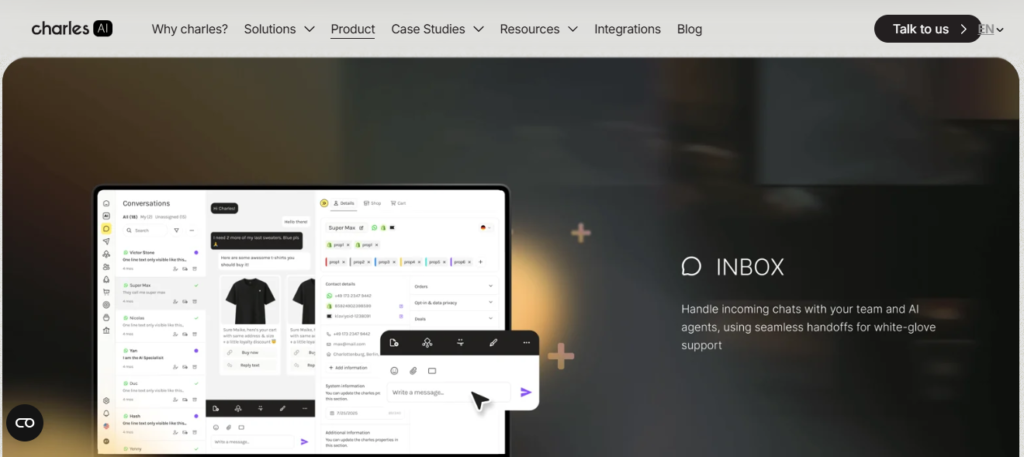
WhatsApp marketing and sales platform designed for agencies and enterprises managing multiple clients or brands. Charles offers white-label solutions and multi-account management that agency owners will appreciate.
Key Features:
✅White-label solution – Rebrand the platform as your own
✅Client management – Handle multiple WhatsApp accounts from one dashboard
✅Broadcast campaigns with advanced segmentation
✅Detailed analytics with client-specific reporting
✅Multi-user access with role-based permissions
✅Team collaboration tools
✅Template management across multiple accounts
✅API access for custom integrations
✅Custom domains for white-label deployment
✅Agency billing features for reselling services
Limitations:
❌Pricing is higher due to white-label and multi-account features
❌Overkill if you’re managing just one business account
❌Some users report the interface could be more intuitive
❌Documentation assumes you’re familiar with WhatsApp API concepts
❌Customer support prioritizes higher-tier plans
❌Setup requires more configuration than simple platforms
13. Kaleyra
What It Is:
Cloud communication platform with verified WhatsApp Business API access, specializing in transactional messaging and compliance for regulated industries like banking, healthcare, and finance.
Key Features:
✅Transactional messaging optimized for OTPs, alerts, confirmations
✅High delivery rates with carrier-grade infrastructure
✅Compliance certifications (HIPAA, PCI-DSS, SOC 2)
✅Industry-specific solutions for banking and healthcare
✅Multi-channel support (SMS, voice, email, WhatsApp)
✅API access with detailed documentation
✅Global reach with local infrastructure
✅DLT compliance for Indian market regulations
✅Real-time analytics and delivery reporting
✅24/7 enterprise support
Limitations:
❌Focused on transactional/utility messages, not marketing
❌Pricing is enterprise-level (not transparent, requires sales contact)
❌Interface is more technical than user-friendly
❌Limited marketing automation features
❌Chatbot capabilities are basic
❌Better suited for developers than business users
14. Tyntec
What It Is:
Enterprise messaging provider offering WhatsApp Business API with emphasis on global reach and cross-border messaging. Tyntec excels at international deployments with carrier-grade reliability.
Key Features:
✅Global infrastructure covering 190+ countries
✅Cross-border messaging with local number support
✅Carrier-grade reliability (99.95%+ uptime)
✅Enterprise system integration (SAP, Oracle, Salesforce)
✅Multi-channel platform (WhatsApp, SMS, Viber, RCS)
✅Number verification and validation services
✅Compliance tools for international regulations
✅Dedicated account management for enterprise clients
✅API platform with detailed documentation
✅24/7 support with SLA guarantees
Limitations:
❌Enterprise pricing (requires sales negotiation, annual contracts)
❌Not designed for small businesses or simple use cases
❌Minimal built-in UI – more infrastructure than platform
❌Requires technical resources for implementation
❌Marketing automation features are limited
❌Sales cycle is lengthy for evaluation and deployment
15. Lark (formerly Smooch)
What It Is:
Unified messaging platform that consolidates WhatsApp conversations alongside web chat, SMS, Facebook, Instagram, and other channels into a single interface. Good for teams juggling multiple customer communication channels.
Key Features:
✅Unified inbox across all messaging channels
✅Channel switching – Continue conversations across WhatsApp, web, SMS seamlessly
✅Message routing to appropriate channels based on customer preference
✅Developer-friendly API for customization
✅Pre-built integrations with popular business tools
✅Conversation continuity (context preserved across channels)
✅Team collaboration with internal notes and assignments
✅Automation capabilities with chatbots
✅Analytics across all channels
✅Mobile SDK for in-app messaging
Limitations:
❌Jack-of-all-trades approach means WhatsApp-specific features aren’t as deep
❌Pricing can get expensive with multiple channels activated
❌Learning curve for setting up cross-channel workflows
❌Some users find the interface less intuitive than specialized tools
❌WhatsApp features lag behind WhatsApp-only platforms
❌Limited marketing automation compared to dedicated tools
16. Msg91
What It Is:
Full-stack communication platform popular in Asian markets, offering WhatsApp API alongside SMS, email, and voice. Msg91 is known for competitive pricing and features tailored to Indian businesses.
Key Features:
✅Bulk broadcasting with high throughput
✅OTP services optimized for fast delivery
✅Transactional alerts and notifications
✅Promotional campaigns with segmentation
✅Multi-channel platform (WhatsApp, SMS, email, voice)
✅Affordable pricing especially for Asian markets
✅DLT compliance for Indian regulations
✅API access with multiple SDKs
✅Template management system
✅Basic analytics and reporting
Limitations:
❌Interface feels dated compared to modern SaaS platforms
❌Advanced marketing automation is limited
❌Customer support quality is inconsistent
❌Documentation could be more comprehensive
❌Some features are India-specific (less relevant globally)
❌Integration ecosystem is smaller than international platforms
❌Chatbot capabilities are basic
17. Route Mobile
What It Is:
Global cloud communications provider offering WhatsApp Business API with enterprise focus. Route Mobile emphasizes security, compliance, and 24/7 support for mission-critical messaging in sectors like finance and telecom.
Key Features:
✅Enterprise-grade security with multiple compliance certifications
✅Mission-critical reliability with redundant infrastructure
✅24/7 dedicated support with SLA commitments
✅Global reach with local presence in multiple regions
✅Scalability for high-volume messaging
✅Multi-channel support (WhatsApp, SMS, RCS, email)
✅Industry solutions for banking, telecom, retail
✅API platform with robust documentation
✅Real-time analytics and reporting
✅Dedicated account management
Limitations:
❌Enterprise pricing (not suitable for small businesses)
❌Requires sales engagement for pricing and contracts
❌More infrastructure provider than ready-to-use platform
❌Limited built-in marketing automation
❌Technical implementation requires developer resources
❌Long sales and onboarding cycles
❌Annual contracts typically required
18. Trengo
What It Is:
Customer engagement platform that brings WhatsApp together with email, live chat, social media, and phone into a unified team collaboration workspace. Trengo focuses on team efficiency and customer service excellence.
Key Features:
✅Unified inbox for all customer communication channels
✅Team collaboration with internal chat, mentions, and assignments
✅Automated workflows with rule-based routing
✅WhatsApp broadcasts with segmentation
✅Chatbot builder for automated responses
✅Analytics dashboard with team performance metrics
✅Integration marketplace (Shopify, WooCommerce, Zapier, more)
✅Mobile apps for iOS and Android
✅Customer data platform with unified profiles
✅SLA management and response time tracking
Limitations:
❌Multi-channel approach means some WhatsApp features aren’t as deep
❌Pricing increases quickly as you add channels and team members
❌Some advanced features require higher-tier plans
❌WhatsApp-specific automation is more limited than specialist platforms
❌Can feel overwhelming if you only need basic broadcasting
❌Some users report occasional syncing delays across channels
19. Chat360
What It Is:
AI-powered WhatsApp marketing automation platform with a visual flow builder focused on conversational AI and personalized customer journeys. Chat360 emphasizes no-code automation for non-technical users.
Key Features:
✅Visual flow builder with drag-and-drop interface
✅Conversational AI with natural language understanding
✅Lead qualification automation
✅Personalized customer journeys based on behavior
✅No-code setup – Build complex workflows without developers
✅WhatsApp commerce features (catalog, payments)
✅Broadcast campaigns with segmentation
✅Multi-language support
✅Analytics and insights on conversation performance
✅Integration capabilities with CRM and e-commerce platforms
Limitations:
❌Relatively newer platform (less proven at enterprise scale)
❌AI capabilities, while good, aren’t as advanced as specialized AI platforms
❌Integration ecosystem is still growing
❌Pricing information isn’t transparent on website
❌Some users report limits on customization for complex workflows
❌Customer support responsiveness varies
❌Documentation could be more comprehensive
20. Brevo (formerly Sendinblue)
What It Is:
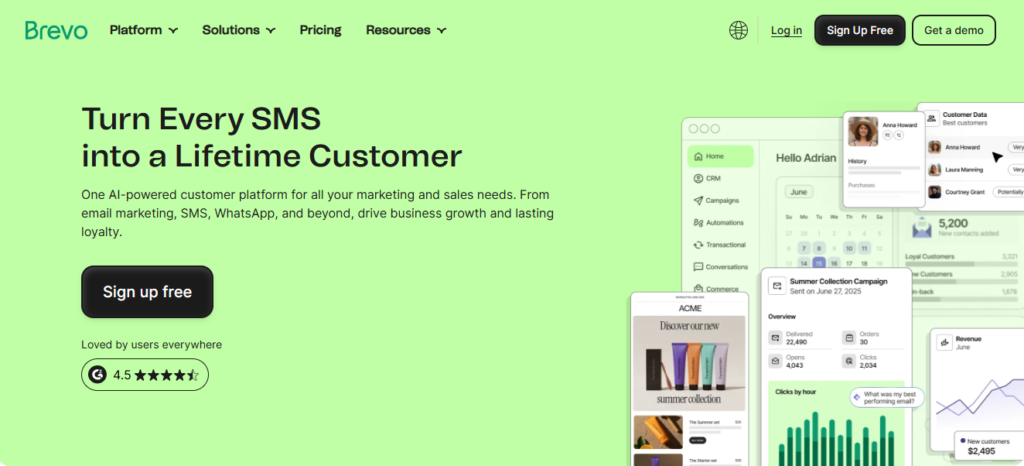
Marketing automation suite that expanded from email and SMS to include WhatsApp broadcasting. Brevo is ideal for businesses already using their platform who want to add WhatsApp to their existing omnichannel marketing strategy.
Key Features:
✅Omnichannel campaigns (email, SMS, WhatsApp, chat in one platform)
✅Marketing automation with cross-channel workflows
✅Contact management with unified database
✅Segmentation across all channels
✅WhatsApp broadcasts integrated with email campaigns
✅Transactional messaging for order confirmations, shipping updates
✅Landing page builder integrated with campaigns
✅CRM features with sales pipeline management
✅Reporting dashboard with cross-channel analytics
✅Familiar interface if you already use Brevo
Limitations:
❌WhatsApp features are newer and less mature than their email platform
❌Not as deep in WhatsApp-specific functionality as dedicated platforms
❌Some advanced WhatsApp features require higher-tier plans
❌WhatsApp pricing structure is separate from core Brevo pricing
❌Limited WhatsApp automation compared to specialists
❌Best value is if you’re using multiple Brevo channels (not WhatsApp alone)
Conclusion
After spending over a decade in messaging and automation, watching WhatsApp evolve from a simple chat app to one of the most powerful business communication channels available, here’s what I’ve learned: the tool you choose matters less than how you use it.
Pick a platform from this list (honestly, any of the top 10 will work for most businesses). Sign up for a free trial. Get your WhatsApp Business API approved. Start with your most engaged customers, the ones who already love your product or service.
Send them something valuable. Ask a question. Start a conversation.
Then watch what happens.
You don’t need to figure everything out on day one. You don’t need the perfect template or the most advanced automation. You just need to start building real relationships at scale, one message at a time.
That’s what WhatsApp broadcasting is really about. And that’s what these tools, when used correctly, make possible.
If you’ve got questions or want to share your experience with any of these platforms, I’m always learning too. The landscape keeps evolving, and the best insights come from people in the trenches actually using these tools every day.
Good luck out there. Message responsibly.
Frequently Asked Questions About WhatsApp Broadcasting
Is WhatsApp broadcasting legal?
Yes, WhatsApp broadcasting is completely legal, as long as you follow the rules.
Here’s what “following the rules” actually means:
You need explicit opt-in consent. This is non-negotiable. You can’t just scrape phone numbers from the internet or buy contact lists and start messaging people. They need to have actively agreed to receive messages from you on WhatsApp. This could be through a website form, a checkbox at checkout, or a verbal agreement during a sales call, but you need to be able to prove consent.
Comply with local regulations. Different countries have different requirements:
- GDPR (Europe): You need clear, documented consent and must honor deletion requests
- TCPA (USA): Prior express written consent required for marketing messages
- India’s TRAI regulations: DLT registration and template approvals required
- Canada’s CASL: Explicit or implied consent with clear identification
I always recommend erring on the side of caution. If someone asks to be removed from your list, remove them immediately, even if technically you could argue otherwise. Your sender reputation (and quality rating with Meta) depends on positive engagement.
If you’re using one of the platforms I’ve recommended in this article, getting proper opt-ins, and respecting unsubscribe requests, you’re on solid legal ground.
How is WhatsApp broadcasting different from bulk SMS?
I’ve run both WhatsApp and SMS campaigns for years, and they’re fundamentally different in ways that matter for your results.
Delivery and engagement:
- WhatsApp: 95-98% delivery rate, 90%+ open rates, typically opened within 3 minutes
- SMS: 85-90% delivery rate, 20-30% open rates, often sit unread for hours
WhatsApp is a conversation platform people actively engage with. SMS feels transactional and often gets ignored unless it’s urgent (like an OTP).
When I choose SMS over WhatsApp:
- OTPs and authentication (SMS is still more universal)
- When I know the audience isn’t active on WhatsApp (rare but happens)
- Very short, urgent alerts where rich media isn’t needed
When I choose WhatsApp:
- Marketing campaigns where engagement matters
- Customer support conversations
- Order updates with tracking links
- Anything requiring images or interactive elements
For most business use cases today, WhatsApp outperforms SMS dramatically. But I still keep SMS in my toolkit for specific situations.
Can I send unlimited messages with these tools?
The short answer: No, there are limits but they’re more flexible than you might think.
Let me explain how WhatsApp’s messaging limits actually work, because this confused me initially.
Your message volume is controlled by “quality rating” and “status tier”:
WhatsApp assigns every business phone number a quality rating (High, Medium, or Low) based on:
- How many recipients block your number
- How many people report you as spam
- User feedback signals (do they reply, engage, or ignore?)
They also assign a status tier (Connected, Pending, Flagged, Restricted) that determines your messaging limits:
Typical daily limits by tier:
- Tier 1: 1,000 unique recipients per 24 hours
- Tier 2: 10,000 unique recipients per 24 hours
- Tier 3: 100,000 unique recipients per 24 hours
- Tier 4 (Unlimited): No daily limit
You start at Tier 1 when your account is new. As you maintain a “High” quality rating, you automatically move up tiers. I’ve seen accounts reach Tier 4 within 2-3 months of consistent, high-quality messaging.
When tools say “unlimited messaging,” they mean their platform doesn’t impose additional limits beyond what WhatsApp itself enforces. You’re still subject to Meta’s quality rating system.
My practical advice:
Start slow. Even if you have 50,000 contacts, don’t try to message them all on day one. Build your quality rating by starting with your most engaged segment (people who’ve recently interacted with you).
As your rating improves and tier increases, scale up gradually.
I currently manage accounts sending 200,000+ messages monthly with no issues but we got there by maintaining high engagement and quality scores over time, not by blasting everyone at once.
What happens if I violate WhatsApp’s policies?
I’m going to be blunt here because I’ve seen this happen, and it’s not pretty.
WhatsApp uses automated systems to detect policy violations. When you cross the line, here’s what typically happens:
First offense (quality rating drop):
- Your quality rating drops from “High” to “Medium”
- Your messaging limits get reduced (you might drop from 100K/day to 10K/day)
- You get a warning notification in your dashboard
- Template approval times may increase
Second offense or serious violation:
- Quality rating drops to “Low”
- Messaging limits severely restricted (often down to 1,000/day or less)
- Account status changes to “Flagged”
- Some templates may get paused automatically
Final straw:
- Permanent phone number ban – No appeals, no second chances
- You lose the number forever for WhatsApp Business use
- Any other numbers on the same Facebook Business Manager might also get flagged
- You’ll need to start over with a new number and new verification
Can I integrate WhatsApp broadcasting with my CRM?
Yes, absolutely, and you should.
Integrating WhatsApp with your CRM is one of the best moves I’ve made for campaign effectiveness. Here’s what’s possible and how it actually works.
What CRM integration enables:
Automatic contact syncing:
- New leads in your CRM automatically get added to WhatsApp contact list
- Contact fields (name, company, deal stage, purchase history) sync in real-time
- Updates in CRM trigger WhatsApp messages (deal moves to “Proposal Sent” → automatic follow-up)
Conversation history in CRM:
- WhatsApp conversations appear in the CRM contact timeline
- Sales reps see the full context before calling (what messages were sent, what the customer replied)
- Support teams can see past conversations when handling tickets
Triggered campaigns based on CRM data:
- Send abandoned cart reminder when CRM shows cart created but not purchased
- Birthday/anniversary messages based on CRM date fields
- Re-engagement campaigns for contacts who haven’t purchased in X months
- Lead nurture sequences based on lead score or behavior
Platforms with best CRM integration in my experience:
- Respond.io – Native HubSpot/Salesforce sync is deep and reliable
- WhatChimp – Good Zapier support + webhook flexibility
- AiSensy – Strong Shopify integration for e-commerce CRMs
- Interakt – Excellent for e-commerce platforms (Shopify, WooCommerce)
Do I need technical knowledge to use these tools?
It depends which tool and what you’re trying to accomplish.
I’ve seen both non-technical marketers succeed and technical teams struggle, it’s about matching the right tool to your skills.
The hybrid approach I often recommend:
Start with a no-code or low-code platform like WhatChimp or Respond.io. Get campaigns running, learn what works, prove ROI. If you outgrow the platform’s capabilities (rare, but happens), then invest in custom development with Twilio.
I’ve seen too many companies spend $50K building custom solutions before they even know if WhatsApp works for their business. Start simple, scale up when necessary.